


Name the professional athletes you respect the most and why.
The two athletes I admired and respected the most are the struggles, determination, a belief in themselves, discipline and their sacrifices for them to get to their peak.
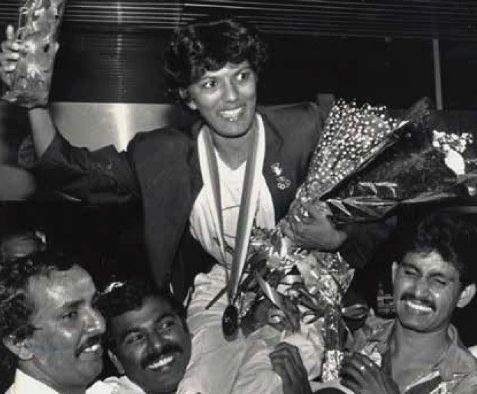
Vasugi, a determined individual, had always been drawn to martial arts, and taekwondo in particular fascinated her.
The elegance and power of the movements, the precision of each kick, and the discipline it required all appealed to her. However, her journey in taekwondo was anything but smooth.From the very beginning, Vasugi struggled with flexibility.
Her muscles seemed to resist every stretch, and even the simplest of kicks felt awkward and strained. While others in her class performed high kicks with ease, her legs barely reached waist height.
Frustration crept in, and she began to doubt whether she was cut out for the sport.But Vasugi was not one to give up easily. Reminding herself of her resilience, she pushed through each training session, repeating kicks and punches over and over.
Her body ached, and there were days she wanted to quit, but her inner drive wouldn’t let her. She applied the same perseverance she had developed over the years in life, reminding herself that there was no right or wrong way—just continuous improvement.
Her struggles weren’t limited to physical challenges. Vasugi also had to face the mental aspect of taekwondo, which involved strict discipline, respect for her peers and instructors, and the patience to learn from failure.
When she failed her first belt test, the disappointment hit hard. Yet, she told herself that failure was only a stepping stone.Over time, Vasugi’s flexibility improved. Her kicks, though still not perfect, became higher and more precise.
The more she practiced, the more she began to understand the art of taekwondo, not just as a sport but as a way of life.
The confidence and self-discipline she gained from her struggles in taekwondo carried over into other areas of her life, strengthening her resolve to keep moving forward, no matter the obstacles.Though her journey in taekwondo was filled with challenges, it taught her the power of persistence and embracing each struggle as part of growth.
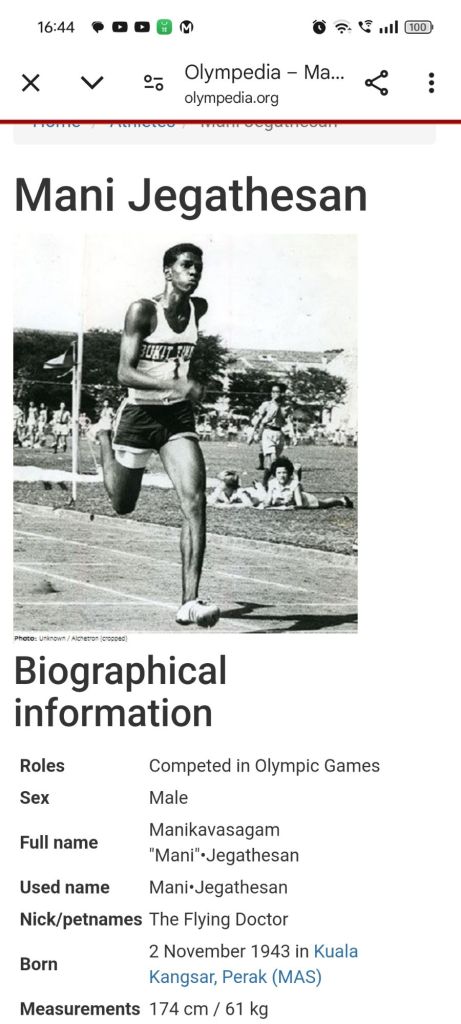
My mom used to talk about this flying doctor’s records. These were his stories.
Mani Jegadasen’s life took a dramatic turn when he discovered his love for running. Growing up, he had never thought much of sports, especially given the academic struggles that consumed his time. But running became his sanctuary—a place where he could escape from the pressures of life and push his limits in a different way.
It started with short runs around his neighborhood, just to clear his mind. Soon, he found himself running longer distances, feeling the rush of adrenaline with each step. What began as a simple hobby soon turned into a passion, and Mani started participating in local marathons.
Despite facing stiff competition, Mani wasn’t concerned about winning. For him, it was about finishing what he started and pushing past his own limits.Yet, Mani faced struggles in running, just as he had in other parts of his life. He wasn’t a natural athlete—his body took time to build stamina, and injuries plagued his progress.
There were moments when his knees buckled from overuse, and he wondered if he should stop. But each time, Mani returned, driven by the same persistence that had carried him through school. He learned to listen to his body, balance training with recovery, and gradually became stronger.
Around the same time, Mani’s professional journey also took an unexpected turn. After years of working in a stable, yet unfulfilling job, he stumbled upon a documentary about flying doctors—medical professionals who provided emergency services to remote, underserved areas.
The idea resonated deeply with Mani, reminding him of his childhood desire to help others and make a difference in the world. Despite having no background in medicine, something clicked inside him. He knew this was his calling.
Becoming a flying doctor was no easy task. Mani had to go back to school, entering the world of medicine—a field that required not only knowledge but also a high degree of mental and physical resilience.
Balancing his rigorous medical training with his running was exhausting, but Mani approached both with the same unwavering determination. The long hours of studying, the sleepless nights on medical rounds, and the intense pressure during emergency scenarios were all familiar in a way.
They echoed the struggles he had faced before: self-doubt, exhaustion, and the fear of failure.During his medical training, Mani would often rise before dawn for a run, clearing his head before diving into the day’s challenges. Running became his source of strength, helping him focus and reminding him that even when things felt insurmountable, he had the endurance to push through.
Eventually, Mani completed his training and joined a team of flying doctors. His life now involved racing against time, flying to remote areas where medical care was scarce and lives hung in the balance. His job was not only about medicine but also about survival—battling harsh weather, rough terrains, and time constraints to save lives.
It was physically and mentally exhausting, but Mani thrived in this environment.Mani’s experience as a runner had taught him how to handle the pressure, how to keep going even when the path ahead seemed endless. Just as in running, where each step brought him closer to the finish line, each flight as a doctor brought him closer to saving a life.
The struggles he had faced—both in running and in his journey to become a flying doctor—had shaped him into someone who never gave up, no matter the odds.
Through it all, Mani Jegadasen found that his struggles, whether on the track or in the skies, had a common thread:
Perseverance. He had learned that every challenge was a test of endurance, and with each race or medical emergency, he proved to himself that he was capable of far more than he ever imagined.
 JumpSoftware
Leave a comment