


If you could meet a historical figure, who would it be and why?
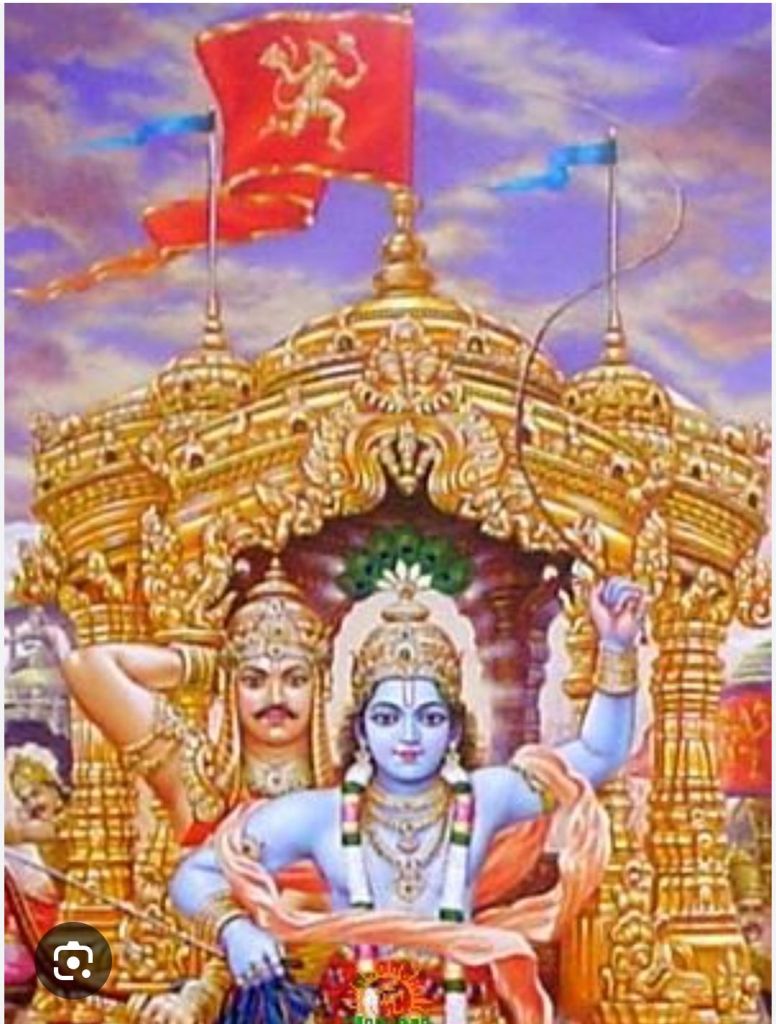
If I could meet the historian who recorded the Bhagavad Gita, I would ask them not only about the war outside, but the war inside — the Kurukshetra that every soul must face. Because the more I live, the more I realise that the battlefield of the Gita is not only a place in ancient India; it is the landscape of the human mind.
From the moment of birth, my own Kurukshetra began.
Not with swords or chariots, but with choices, instincts, fears, duties, and desires.
Every limitation I broke, every lesson I learned, every blessing that came from within — all were battles fought in silence. No one saw them, but I lived them.
Just like Arjuna, there are days when I stand in the middle of my life, confused and overwhelmed, asking:
“Why me? Why this moment? Why this challenge?”
And just like Krishna, there is a voice inside me — quiet, steady, ancient — guiding me back to clarity. That inner Krishna does not shout. He waits. He reminds. He keeps the reins steady when I cannot hold them myself.
The chariot in the Gita is not only wood and wheels; it is the body.
Arjuna is not just a warrior; he is the mind — frightened, unsure, emotional, questioning.
Krishna is not just a deity; he is the inner wisdom, the intuition that never abandons us.
And Hanuman on the flag is the strength we forget we carry.
Every time anger rises, that is a battlefield.
Every time doubt whispers, that is a battlefield.
Every time the past pulls or the future scares, that is a battlefield.
Every time courage returns from nowhere, that too is a battlefield.
The Kurukshetra of daily life is made of silent wars:
The war between fear and faith.
The war between giving up and trying again.
The war between pleasing others and choosing yourself.
The war between instinct and inner truth.
The war between the noise of the world and the stillness of the soul.
Some wars are small — a moment of patience, a moment of discipline.
Some wars are huge — breaking generational pain, letting go of unhealthy people, forgiving what feels unforgivable.
But every Kurukshetra has one purpose:
to push us from who we are into who we must become.
Just as Arjuna’s chariot held together through fire, arrows, storms and chaos, my life holds together through fatigue, pain, confusion and pressure. And just as Krishna guided with a steady hand and a timeless wisdom, the voice within guides me — sometimes as intuition, sometimes as sudden clarity, sometimes as silence.
This is why I understand the Bhagavad Gita not as an old epic, but as my personal diary written thousands of years before I was born. The narrator who told the story of Arjuna’s war also told the story of mine, without knowing my name.
Because every human being, knowingly or unknowingly, must walk onto their own battlefield and face themselves.
And that is the true inner Kurukshetra —
a place where the war is never against the world,
but always toward becoming the best version of our own soul.
 JumpSoftware
Leave a comment